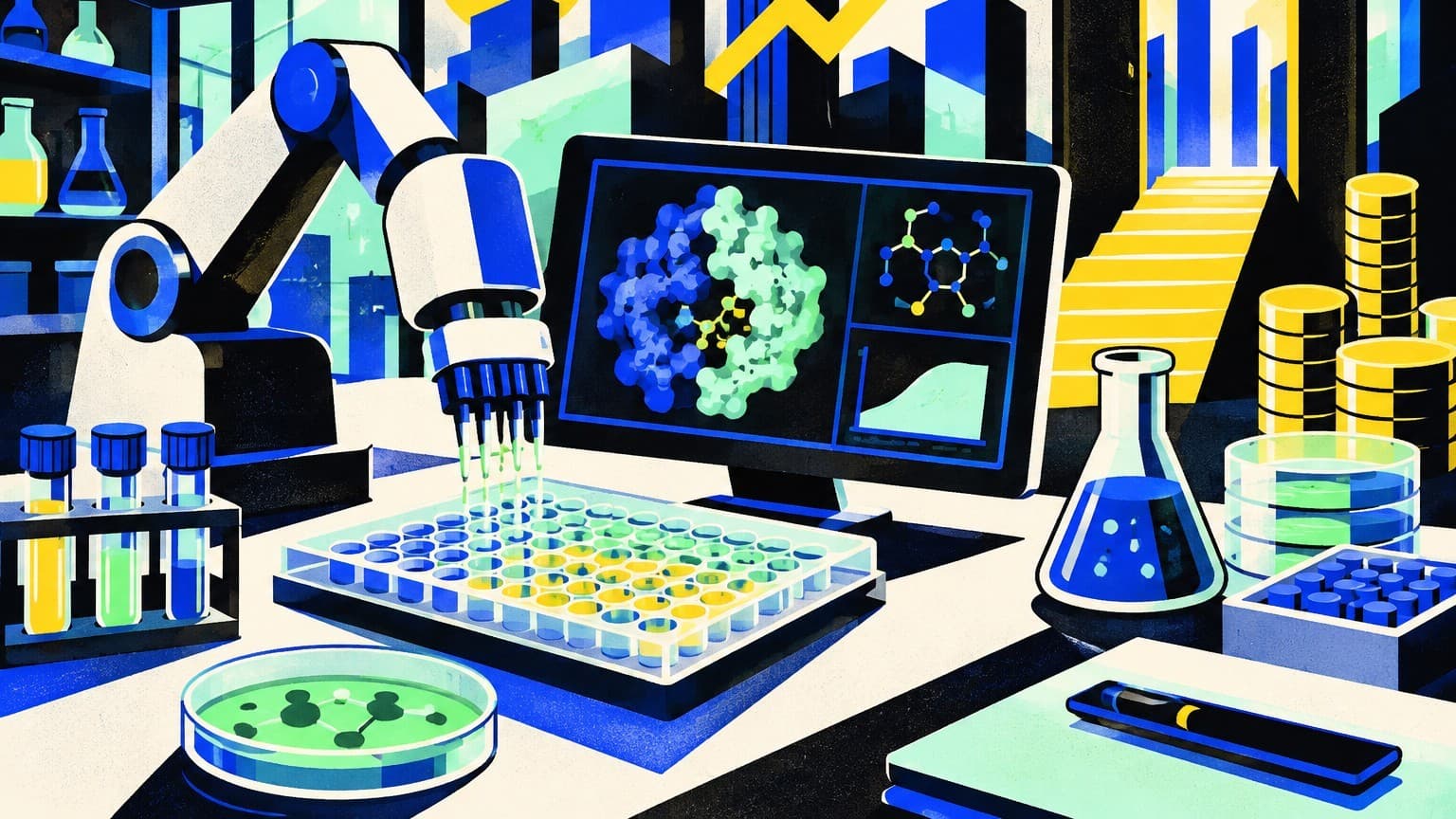
Anthropic disclosed in its S-1 filing with the Securities and Exchange Commission on Monday that it is building its own molecular biology laboratory and hiring specialists to pursue its own drug discovery work. An August report by The New York Times said the IPO could raise more than $100 billion and value the company near $2 trillion, though the filing does not specify an offering price or share count.
The company, maker of the Claude AI platform, is preparing to list on Nasdaq under the ticker “ANT.” The filing does not specify an offering price or share count. Anthropic described a form of “Powerful AI” that could within a few years match or exceed top human experts, operate laboratory equipment and run robotic systems. The S-1 states: “If Powerful AI is directed at solving humanity's hardest problems and the risks are managed responsibly, the potential is extraordinary,” citing drug discovery, disease detection and personalized therapy as possible benefits.
Anthropic already has partnerships with Novo Nordisk and Bristol Myers Squibb, and Novartis CEO Vas Narasimhan joined its board in April. Its Claude for Life Sciences platform connects to electronic laboratory notebooks, scientific databases and research tools, with specific tools for organic chemistry, structural biology, lab protocols and bioinformatics.
The company is expanding beyond software. Its Model Hardware Standard lets AI agents operate microscopes, liquid handlers and robotic arms sold commercially. Anthropic's April acquisition of computational biology startup Coefficient Bio, previously reported as a $400 million deal, involved 15.4 million Anthropic shares in the S-1, with a portion tied to continued employee service.
The filing warns that life sciences research requires handling biological and chemical materials, using lab instruments and following biosafety and environmental rules, activities outside Anthropic's historical experience. The company said the work could expose it to liabilities such as workplace injuries or environmental contamination, and any drug candidates from its research would face “lengthy, costly, and uncertain development and regulatory pathways” and might never generate revenue.
Anthropic also cautioned that deploying AI in sensitive scientific and medical contexts could lead to errors, inaccurate results or hallucinations that contribute to patient harm or compromised research. The company said it may not fully understand or explain why its models produce particular outputs, limiting its ability to predict failures or satisfy regulatory transparency and explainability requirements.
The filing said healthcare and life sciences offerings could face regulation under statutes covering drugs, biologics, devices and protected health information, including FDA rules. Regulators could require additional authorizations, product modifications or restrictions on certain applications, the filing said.
Anthropic has already faced federal friction. In March, the Department of Health and Human Services blocked employees from using Claude as President Donald Trump sought a government-wide blacklist, while tools from OpenAI and Google stayed available. The FDA initially used Claude for its Elsa drug-review platform but now uses Google's Gemini as its main AI model.
Anthropic cited expectations that global pharmaceutical spending will exceed $2 trillion in 2026, and it plans to operate on both sides of the market: supplying AI to drugmakers and building research infrastructure for its own scientific discoveries.
Sources
To report an error in this article, write to corrections@venturistnews.com. Corrections log.
Elliot Marsh covers startups, IPO filings and the money behind them for Venturist. Elliot writes from SEC filings, company announcements and published reporting.